
A Google Shopping campaign audience can become an important contributor to campaign performance – one that’s often overlooked.
Most Shopping advertisers understandably concentrate on the product feed. Product titles, descriptions, categories, product types, pricing, images, and other feed attributes help Google determine which products are relevant to a shopper’s search.
But the product feed is only one part of the equation.
A Shopping campaign audience can provide another layer of information that can help Google Ads understand who is searching, not simply what they searched for. Used properly, audience data can reveal which types of prospective customers are more likely to purchase, which are less valuable, and where advertising budget may be used more effectively.
For many Shopping campaigns, audiences become an increasingly useful source of optimization data as the campaign accumulates traffic and conversions.
Why A Shopping Campaign Audience Matters
Unlike traditional Google Search campaigns, Shopping campaigns do not rely on advertiser-selected keywords as their primary targeting mechanism.
Instead, Google evaluates the shopper’s search along with information contained in the Merchant Center product feed to determine whether individual products are eligible to participate in the auction.
This makes product feed optimization particularly important. Strong product titles, descriptions, product types, categories, GTINs, brands, and other attributes give Google better information for matching products to appropriate searches.
However, two people entering essentially the same search may represent different levels of purchase intent and customer value.
One shopper might be a previous customer. Another may have visited the website repeatedly during the past week. A third might have abandoned a shopping cart yesterday. Another could be actively researching products within the category for the first time.
Audience data gives the advertising platform additional information about these types of differences.
Observation Is Usually the Starting Point
In Standard Shopping campaigns, audiences are often most useful initially as an observation and analysis tool.
Adding an audience in Observation mode does not restrict the campaign to people within that audience. The campaign can continue reaching all otherwise eligible shoppers while Google collects separate performance data for users who belong to the selected audience segments.
This makes it possible to compare metrics such as:
- conversion rate
- cost per conversion
- revenue
- return on ad spend
- average order value
- click-through rate; and
- other measures of customer value
Over time, meaningful differences may emerge.
An audience segment converting at twice the account average is useful information. So is an audience consuming significant advertising spend while rarely producing sales.
Audience analysis therefore gives Shopping advertisers another way of identifying where campaign performance is coming from rather than treating every shopper as economically equivalent.
Audiences Can Also Inform Smart Bidding
Shopping campaign audience information has become more relevant as Google Shopping campaigns increasingly rely upon automated bidding.
With automated bidding strategies such as Target ROAS, Google evaluates a large number of auction-time signals when determining what an individual click may be worth. First-party audience segments added in Observation mode can provide additional signals to automated bidding without restricting campaign reach.
That’s an important distinction. The campaign manager does not necessarily need to manually assign a different bid to every audience. Instead, well-configured audience information can provide Google’s bidding system with more context when evaluating individual auctions.
For more about how bidding has changed, see our discussion of automated bidding in PPC campaigns.
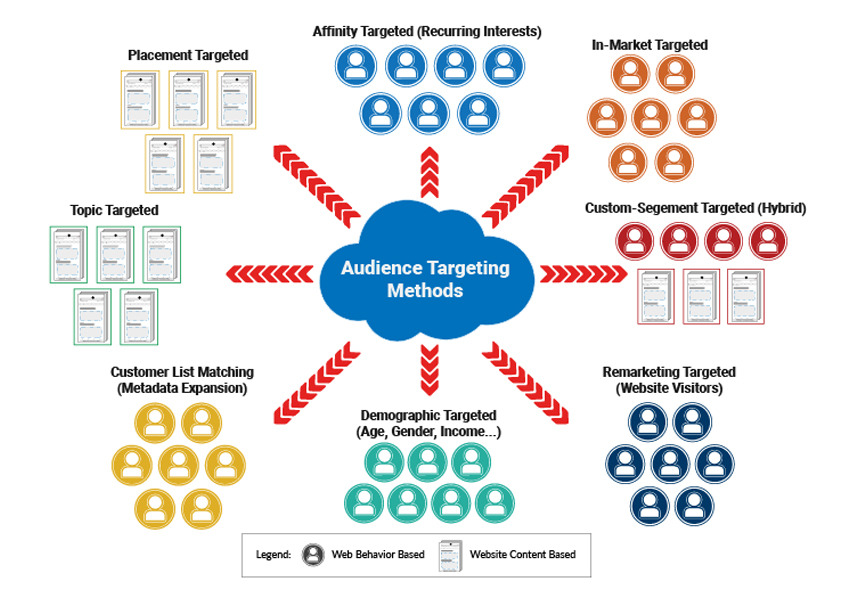
Website Visitor and Remarketing Audiences
One of the most obvious places to begin is with people who have already interacted with the advertiser’s website.
Google now generally refers to these as your data segments, although many advertisers still think of them as remarketing audiences.
Useful segments may include:
- all previous website visitors
- recent visitors
- repeat visitors
- individual product viewers
- category-page visitors
- shopping cart abandoners
- checkout abandoners
- previous purchasers and
- high-value customers
These groups can behave very differently.
Someone returning to a product page for the third time may represent substantially stronger purchase intent than a first-time visitor. A shopper who placed an item in the cart yesterday may have an entirely different probability of purchasing than someone who briefly viewed the homepage three months ago.
Rather than treating all previous visitors as a single audience, more thoughtful audience segmentation can reveal these differences.
Customer Match Can Be Particularly Valuable
Google Customer Match allows advertisers to use their own first-party customer information to create audience segments within Google Ads.
For established eCommerce advertisers, this can become an important Shopping campaign asset.
Customer Match lists might include:
- all previous purchasers
- repeat customers
- high-value customers
- customers purchasing particular product categories
- recent customers
- inactive customers or
- other customer groups with meaningful differences in purchasing behavior
This is especially useful when the advertiser already has substantial customer history that Google would otherwise know little about.
Customer Match can help connect information already known by the business with the auction-time decision making occurring within Google Ads.
In-Market Audiences
Google’s in-market audience segments identify people whose recent behavior suggests that they may be actively researching or considering products or services within a particular market.
For an eCommerce advertiser, these can provide another useful layer of information about purchase intent.
An advertiser selling outdoor furniture, for example, might discover that shoppers classified within certain home, garden, renovation, or furniture-related in-market segments convert materially better than account averages.
But these relationships should generally be discovered through data rather than assumed in advance.
An audience that sounds logically relevant is not necessarily a profitable audience.
Affinity and Interest Audiences
Affinity audiences identify longer-term interests and habits rather than immediate buying intent.
These segments can be particularly interesting for products associated with hobbies, recreation, professions, lifestyle interests, enthusiast markets, or luxury purchases.
For example, products associated with boating, golf, automotive enthusiasts, home improvement, technology, travel, or fitness may show meaningful differences among related affinity audiences.
Again, the value is not simply adding as many audiences as possible. The objective is to collect enough meaningful data to identify patterns that can eventually inform campaign decisions.
Detailed Demographic Audiences
Google also provides detailed demographic audience segments based on longer-term characteristics such as education, employment, marital status, homeownership, and other life characteristics.
These can be especially useful when the likely purchaser of a product has a recognizable demographic profile.
A company selling premium home-improvement products, for example, may discover substantial differences between homeowners and renters. Products aimed at business professionals may perform differently among particular employment or education segments.
These characteristics should still be tested against actual campaign results rather than used simply because they appear intuitively correct.
Age, Gender, Household Income and Other Demographics
Standard demographic reporting can reveal additional performance differences.
Depending upon campaign and market availability, Google Ads can report on characteristics including:
- age
- gender
- household income and
- other demographic classifications
For many products, these differences are minimal. For others, they can be dramatic.
A premium product may generate substantially stronger ROAS among higher household-income groups. Another product may unexpectedly perform well across demographic categories the advertiser had not initially considered part of the target market.
This is another reason we generally prefer beginning with observation rather than prematurely restricting campaign reach.
Be Careful With the “Unknown” Demographic Category
Google cannot reliably determine demographic information for every shopper. As a result, a meaningful percentage of traffic may fall into an “unknown” demographic classification.
Advertisers sometimes see weak performance from “unknown” audiences and are tempted to exclude them entirely. But that deserves caution.
The Unknown category does not necessarily represent a particular type of low-quality user. It includes people for whom Google simply does not have sufficient demographic information.
Removing that group can therefore eliminate a considerable amount of otherwise valuable traffic.
Negative Audiences Can Be as Important as Positive Audiences
Audience strategy is not limited to identifying people you want to reach.
Identifying audiences that consistently perform poorly can sometimes be equally valuable.
Google Ads allows audience exclusions within Standard Shopping campaigns. Depending upon the account, product, audience type, and campaign objectives, it may make sense to exclude audience segments whose demonstrated performance indicates that they are unlikely to produce profitable sales.
Potential examples might include certain:
- first-party audience segments
- in-market segments
- affinity audiences
- demographic groups or
- other audience classifications that consistently generate poor economic results
Negative audiences can therefore help shape campaign traffic in somewhat the same way that negative keywords help shape search-query traffic.
There is an important difference, however: audience exclusions can remove large groups of potential shoppers. They should generally be based on sufficient performance data rather than assumptions about who should or should not purchase the product.
Don’t Confuse Audience Logic With Search Query Targeting
Audience configuration should complement rather than replace good Shopping campaign structure.
Search-query relevance still begins with the product feed and the way products are organized within the campaign.
A well-designed Shopping campaign structure can provide greater control over product groups, ad groups, bidding, reporting, and search-query matching. Negative keywords can provide another mechanism for preventing products from entering obviously inappropriate searches.
Audiences represent an additional dimension:
The search query helps explain what the shopper wants. The audience data may help explain who the shopper is and how valuable that shopper may be.
Used together, these signals provide stronger inputs for optimization.
Audience Configuration Should Evolve Over Time
Audience configuration is not something that should be completed once during campaign setup and then forgotten.
Early in the life of a campaign, the primary objective may simply be to attach useful audience segments in Observation mode and begin accumulating data.
As conversion volume grows, the campaign manager can begin asking more useful questions:
- Which audiences convert at the highest rate?
- Which produce the strongest ROAS?
- Do previous customers behave differently from new customers?
- Are cart abandoners substantially more valuable than ordinary site visitors?
- Do certain in-market audiences consistently outperform?
- Are there demographic segments consuming disproportionate spend?
- Are some audiences strong enough to justify a separate campaign strategy?
- Are there consistently unprofitable audiences that should be excluded?
The answers may also change with seasonality, pricing, promotions, competitive activity, changes in product mix, or broader changes in the market.
Audience analysis therefore fits naturally into the broader process of ongoing PPC performance optimization.
The Objective Is Better Information, Not More Settings
There is a temptation in sophisticated Google Ads accounts to equate more configuration with better management. But that’s not necessarily the case.
An account containing dozens of audiences is not automatically better optimized than an account containing five useful ones.
The purpose of audience configuration is to give both the campaign manager and Google’s bidding systems better information about differences in customer behavior and economic value.
Useful audience segments should either improve our understanding of campaign performance, contribute useful information to bidding, support a specific campaign strategy, or identify traffic that should reasonably be excluded.
If an audience does none of those things, adding it simply creates additional complexity.
Audience Development Is an Ongoing Shopping Optimization Discipline
We treat audience development as an ongoing optimization discipline rather than a one-time campaign setting.
As Shopping campaigns mature, we evaluate website visitor audiences, Customer Match lists, in-market segments, affinity audiences, demographic performance, and potential audience exclusions to identify meaningful differences in customer behavior.
Combined with strong product feed optimization, thoughtful campaign structure, automated bidding, search-query analysis, negative keywords, and ongoing performance monitoring, audience configuration provides another important mechanism for improving Google Shopping campaign performance over time.
The objective is not simply to reach more people. It’s to help the campaign recognize which auctions, shoppers, and customer segments are most likely to generate profitable business.
