
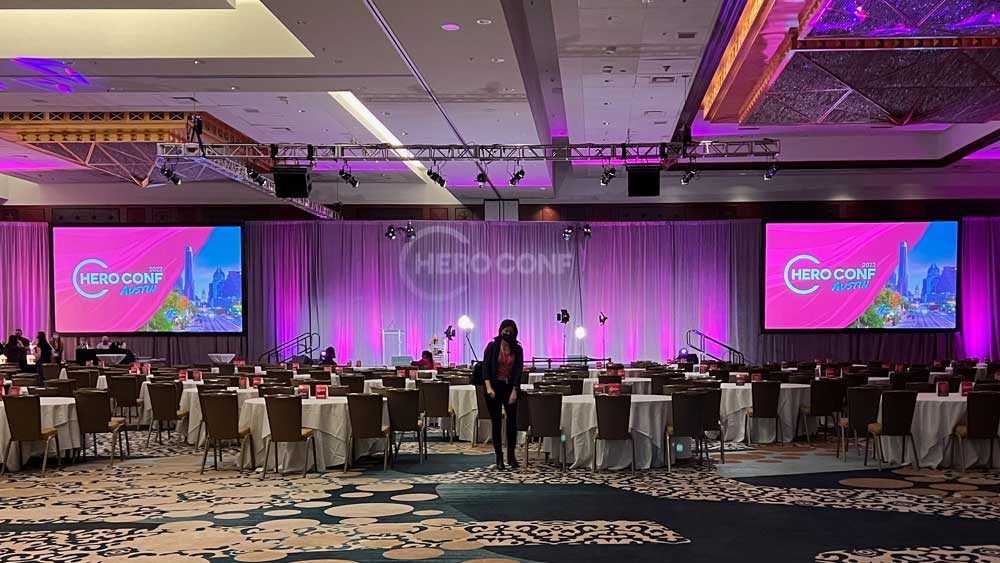
The PPC Hero Conference on paid search advertising was held January 31 and February 1, 2022 at the downtown Hilton in Austin, Texas — the first in-person edition following two COVID-related cancellations. After a long wait, it was good to be back in a room full of paid search professionals.
To our knowledge, Hero Conf remains the only conference devoted entirely to paid search advertising — no SEO tracks, no content marketing, no brand strategy sessions sharing the schedule. That focus is what makes it valuable. Every session is directly applicable to the work of managing Google and Microsoft Ads campaigns, and the attendees reflect that — practitioners, not generalists.
The 2022 Austin conference did not disappoint. Here are three sessions that stood out.
Conference Highlights
Designing Custom Audiences in PPC Campaigns
Sam Tomlinson of Warschawski delivered one of the more substantive sessions of the conference — a detailed walkthrough of audience strategy for paid search. He presented six structures for building stronger custom audiences using custom segments, covering approaches that go well beyond the standard configurations most advertisers use.
Audience configuration is one of the more underutilized levers in search campaign management. Most accounts rely on observation-only audiences or basic remarketing lists. Tomlinson’s session made a compelling case for investing more deliberately in how audiences are built and layered — particularly as Google’s targeting options continue to expand and automated bidding becomes more reliant on audience signals to optimize effectively.
Reporting in PPC Campaigns
Amy Hebdon of Paid Search Magic presented on what separates useful campaign reports from ones that get skimmed and filed. Her focus was on the client-agency relationship — specifically, what clients actually need from reporting versus what agencies typically provide.
The gap between those two things is often wider than some realize. Reports that lead with data rather than insight, that show activity rather than progress, or that fail to connect campaign metrics to business outcomes tend to erode client confidence over time — regardless of how well the campaigns are actually performing. Hebdon’s session was a useful prompt to reassess not just what gets reported, but how it gets framed and what story it tells. Our own reporting approach was sharpened as a result.
Designing an Agency You Enjoy Working At
Kirk Williams of Zato Marketing took a different angle — less about campaign tactics and more about the business of running a paid search agency. His presentation made a thoughtful case against scaling for scaling’s sake, arguing that growth without intention tends to produce agencies that are larger but not better, and that serve more clients without serving any of them particularly well.
It’s a tension that any service business eventually confronts. Williams approaches it with some nuance — the argument isn’t anti-growth, but rather pro-deliberateness about what kind of agency you want to run and what trade-offs come with different growth paths. He has a book forthcoming on the topic that develops these ideas further.
PPC Hero Conference Summary
The 2022 PPC Hero Conference in Austin marked a strong return for the conference after the COVID interruption. The sessions were substantive, the format worked well, and the concentration of paid search practitioners in one place made for genuinely useful conversations both in and out of the sessions.
Kudos to the presenters and to the organizers at BrainAds for putting together a well-run event. The quality of the content and the on-site execution both reflected the care that goes into a conference of this caliber.
Hero Conf has since been folded into the Brighton SEO conference as dedicated paid search tracks — a pairing that has worked well. We attend both the UK and US editions and expect to continue doing so.
