

Paid search performance management covers the ongoing monitoring, optimization, and reporting of search ad campaign performance. For most accounts, a well-structured campaign isn’t the finish line – it’s the starting point. What happens after launch determines whether the campaign improves over time or gradually loses ground to the market.
At Blastoff Advertising, we treat performance management as a continuous discipline, not a monthly maintenance task. The accounts we manage long-term are the ones where ongoing attention produces measurable, compounding returns – and where stepping back would mean leaving real opportunity on the table.
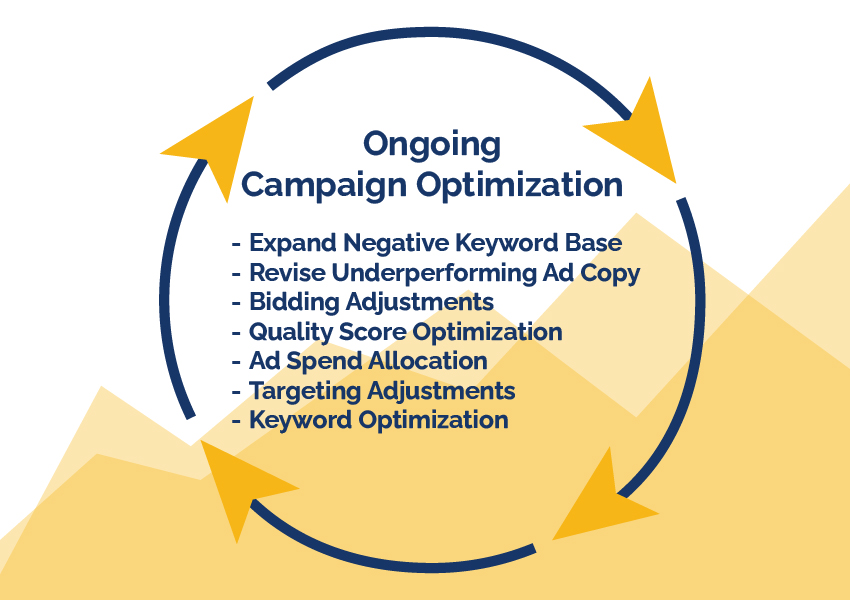
What Paid Search Performance Management Involves
Paid search performance management isn’t just reviewing a report and making a few bid adjustments. Done properly, it’s a structured process of tracking what the campaign is doing, identifying what’s working and what isn’t, and making deliberate changes to move performance in the right direction.
That process includes reviewing search term reports to catch irrelevant traffic before it drains budget, evaluating keyword and ad group performance to identify where to push harder and where to pull back, reviewing quality scores and ad relevance signals, monitoring and adjusting ad copy and ad extension (asset) performance, tracking and adjusting automated bidding strategies as they accumulate data and mature, adjusting campaign structure when the data suggests a better way to organize things, monitor alerts we set up in the campaigns, and related activities. It also includes watching for external changes – competitor behavior, seasonal shifts, market changes – that can affect performance without any change to the campaign itself.
Ongoing performance optimization is most valuable when it’s consistent. Sporadic attention tends to miss the gradual drift that erodes performance over weeks or months. Regular, systematic review catches problems early and identifies improvement opportunities before they become missed revenue.
Real-Time Monitoring and Alert Systems
Our performance management platform pulls campaign data in real-time, which allows us to go beyond periodic check-ins and configure automated alert systems that flag issues as they occur.
Our fault monitoring systems watch for specific conditions – sudden drops in conversion volume, unusual cost spikes, impression share changes, budget pacing issues, and other signals that something may be off. Rather than discovering a problem during a weekly review, we’re alerted when it happens. That’s a meaningful difference when an issue is actively wasting budget or suppressing performance.
We also use PPC alert monitoring we’ve developed in-house – tracking when campaigns hit conversion thresholds, when CPA trends are moving in the right direction, or when conditions suggest a good moment to test a bid adjustment or expand reach.
Performance management isn’t only about preventing problems. It’s also about recognizing and acting on favorable conditions quickly.
Calibrating Management to the Account
Not every account requires the same level of ongoing attention. A mature campaign in a stable, low-competition market with consistent conversion performance needs less active intervention than a campaign in a volatile category with aggressive competitors, seasonal swings, and a large keyword set. One of the first conversations we have with new clients is about the appropriate management intensity for their specific account.
We’re not believers in the common agency model of charging a percentage of ad spend for ongoing optimization. That model creates a misalignment – it rewards higher spend regardless of results. We’re only interested in being involved when a client is continuously benefiting from our management, and we can report on that with actual data. Accounts that reach a stable, well-optimized state with minimal ongoing gains from active management don’t need the same level of involvement as accounts that are still learning, scaling, or operating in competitive conditions that change frequently.
We’ve managed accounts under continuous monitoring for years. Others reach a point of diminishing returns on active management and shift to a lighter-touch model. The right answer depends on the account, the market, and the growth objectives.
What We’re Actually Optimizing
The core objective of search campaign performance management is improving business outcomes – not just advertising metrics. That means we look at conversion volume and quality, cost per acquisition relative to the value of a conversion, revenue contribution where it’s trackable, and the overall trajectory of the account over time.
Ad spend allocation is an ongoing optimization lever – making sure budget is concentrated where it’s producing the best return and pulled back where it isn’t. As campaigns mature and automated bidding strategies collect more conversion data, there are often opportunities to expand reach, test new segments, or restructure campaigns in ways that weren’t possible in the earlier phases. The optimization and automation process evolves as the account does.
Reporting and Transparency
Performance management without clear reporting doesn’t work! Monthly campaign reports give clients a structured view of what’s happening in their account, what changed during the period, and what the data suggests for the next steps. Between reports, client dashboards provide real-time visibility into the metrics that matter most, so clients aren’t waiting for a monthly PDF to know how their campaigns are performing.
We report on the key metrics – conversion volume, cost per acquisition, revenue where measurable, and trend direction. We strive for reporting that tells a clear story about what the advertising is producing and where the opportunities are.
For more on how we think about performance and what actually defines success in a paid search account, the PPC campaign success FAQ covers the core principles. To learn more about our approach to campaign management across campaign types, or to discuss whether active performance management makes sense for your account, get in touch.
