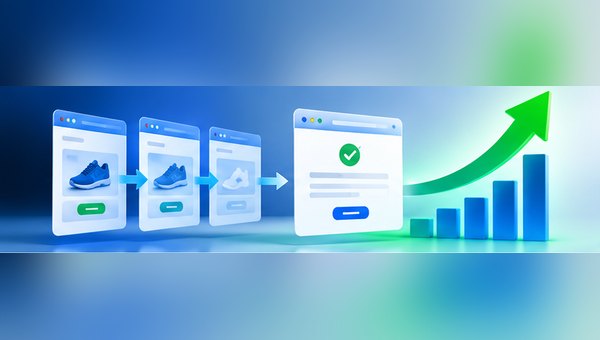

Sales funnel path analysis examines the actual routes visitors take through a website after arriving from a PPC campaign. Rather than treating the sales funnel only as a conceptual model, we can use analytics and behavioral data to observe how real visitors move from their initial landing page toward–or away from–a conversion.
These paths can reveal both successful conversion journeys and the failure modes of traffic that does not convert. We can compare paid traffic with organic and referral traffic, first-time visitors with returning visitors, and different campaigns or traffic sources with one another. We can also examine how long visitors take to progress through the funnel. B2B buyers, for example, may make several visits over a much longer period before converting than B2C buyers.
For PPC campaigns, this matters because the ad click is only the beginning of the conversion path. A campaign can deliver the right visitor at an acceptable cost, but the website still has to move that visitor toward the appropriate next step. For search ad campaigns, funnel path analysis can help show whether visitors are landing on the right page, finding information that matches their intent, and seeing a clear next step after the click.
Visualizing Sales Funnel Paths
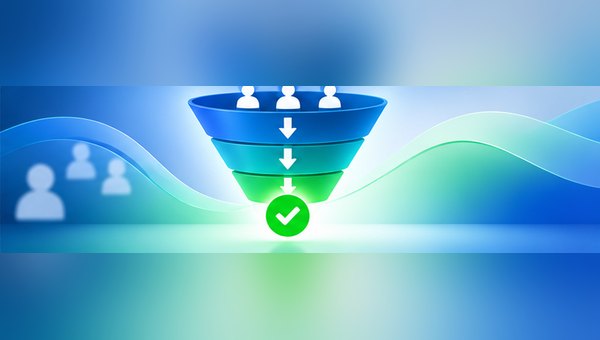
This diagram illustrates some of what we may learn by analyzing traffic flow out of paid search campaigns and into an advertiser’s website.

In the diagram above, the blue “Attention Unit” (AU) bubbles represent potential customers or clients–real people using the internet. Their navigation activity is represented by movement from left to right through the funnel.
The attention unit L1 (v1) represents a person who sees a Display ad for the advertiser and visits the website for the first time: lead one, visit one. In a later session, this same person, shown as L1 (v2), returns to the site. During the second visit, the user may spend more time on the site, scroll farther, and visit more pages than during the first visit. Their behavior may indicate that they have progressed from a high-funnel visitor to a mid-funnel prospect. Some visitors eventually move into the low funnel and convert.
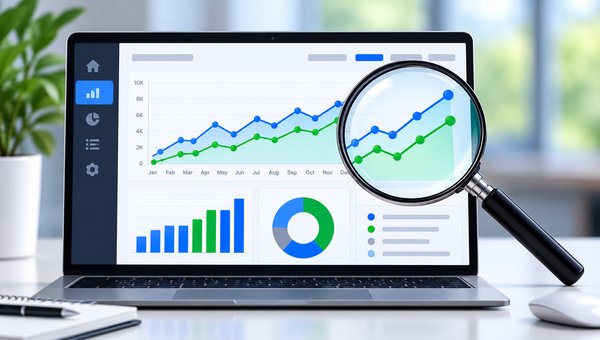
By combining website analytics such as GA4, advertising-platform attribution data, screen recordings, heat maps, and other behavioral information, patterns can begin to emerge. Groups of visitors may follow similar paths through the website, revealing different visitor personas and different routes to conversion.
The objective is not simply to draw a theoretical funnel. It is to identify the paths that real visitors are actually taking, including the paths that lead to conversions and those that end without one.
Start With a CRO Baseline
Before identifying sales funnel paths, a CRO baseline is established using data from the PPC platform and web analytics such as Google Analytics 4 (GA4). Establishing this baseline is an important part of conversion rate optimization because it provides a starting point for measuring whether later changes actually improve the conversion path.
Traffic sources and visitor classes are reviewed first. This may include paid search traffic, Display campaign traffic, organic search visitors, returning users, referral traffic, and other audience segments. From there, we look for common navigation paths visitors take as they move through the site.
The goal is to understand how different types of visitors enter the site, what pages they interact with, where they continue, and where they leave. This baseline also makes it easier to separate an actual improvement from a normal fluctuation in traffic or conversion volume.
Using Analytics and Heat Maps to Study Visitor Behavior
For identifying sales funnel paths, we may, with permission, install heat maps and session-recording tools that help trace how visitors interact with the site. Heat maps can show where users click, how far they scroll, which areas of a page attract attention, and where engagement appears to weaken.
This information, combined with web analytics, allows us to study aggregate behavior as visitors land on the site, interact with content, and navigate to other pages. Instead of relying only on assumptions about how the site should work, we can review how visitors are actually using it.
This type of analysis overlaps with website traffic flow analysis, where navigation patterns are studied to identify roadblocks, unnecessary detours, and opportunities to make the route to conversion more efficient.
Converting and Non-Converting Traffic Both Matter
We place emphasis on studying both converting and non-converting traffic. Converting traffic helps show which paths are already working. Non-converting traffic helps identify where visitors may be losing interest, encountering confusion, or failing to find the right next step.
This comparison is often where useful CRO insights appear. If one traffic source converts well while another drops off quickly, the issue may involve search intent, landing page relevance, page structure, call-to-action placement, or the visitor’s stage in the sales funnel.
Studying only the visitors who convert can hide important information. The paths taken by people who almost convert–or who repeatedly return to the site but never complete the desired action–can sometimes reveal more about what needs to be improved.
Identifying Conversion Choke Points
Once common sales funnel paths are identified, they provide a foundation for understanding conversion choke points. These are places where visitors slow down, abandon the page, exit the site, or fail to continue toward the intended action.
A choke point is not always a broken page. Sometimes it is a mismatch between visitor intent and the next step being offered. A high-funnel visitor may need education before requesting a quote, while a low-funnel visitor may need a direct contact option immediately.
A useful way to evaluate a choke point is to ask whether the page answers the visitor’s next likely question. If the page creates uncertainty, hides the next step, or asks for too much commitment too early, visitors may stop moving through the funnel. Analytics may show us where visitors stopped; understanding why they stopped requires looking at the page and the visitor’s likely intent at that point in the journey.
Common choke points can include unclear messaging, weak calls to action, missing trust signals, confusing navigation, slow page speed, poor mobile layout, or content that does not match the visitor’s reason for arriving.
How Sales Funnel Paths Support PPC Strategy
Sales funnel path analysis can also inform PPC campaign management and optimization. When paired with site visitor persona insights, this analysis can influence keyword strategy, targeting, audiences, landing page selection, and ad copy. All of these factors affect post-click conversion performance.
For example, if analytics show that visitors from a certain campaign need more educational content before converting, the landing page or remarketing strategy may need to support that stage of the funnel. If another segment converts quickly from a specific page, the campaign may be able to use more direct ad copy and a stronger conversion-focused call to action.
Funnel analysis can also expose differences between campaigns that appear similar when viewed only at the top-line level. Two campaigns may produce roughly the same number of leads, for example, while sending visitors through very different paths. One group may convert quickly and efficiently, while another may require multiple visits, additional content, or substantial follow-up before becoming a qualified lead.
This is where CRO analysis and PPC strategy overlap. The better we understand how visitors move through the site, the better we can align campaign traffic with the right message, landing page, and conversion path.
The Bottom Line on Identifying Sales Funnel Paths
Identifying sales funnel paths helps advertisers understand what happens after traffic reaches the website. By reviewing analytics, heat maps, converting visitors, and non-converting visitors, it becomes easier to see where the site supports conversions and where it creates friction.
The value comes from looking beyond top-line metrics. A conversion rate may tell us whether performance improved or declined, but examining the paths visitors take can help explain why.
This analysis gives PPC campaigns a stronger foundation. Better funnel insight can improve keyword strategy, targeting, audience development, ad copy, landing pages, and conversion rate optimization.
If your website is receiving PPC traffic but visitors are not moving through the funnel as expected, Blastoff Advertising can help review sales funnel paths, conversion choke points, and campaign alignment to identify where improvements may support better results.