
Display Ad Campaigns: A 13-Stage Development Process
Blastoff Ads uses a structured creative process to design display ad campaigns. On the Microsoft Ads side, these are called Audience Campaigns. We find the most suitable images for audience campaign ads by drawing from the advertiser’s image base, stock art and photography libraries, and when appropriate by designing custom images. Ad extensions are customized down to the individual ad group level.
The first step in developing display ad campaigns is competitive research. Good display ad campaign targeting is critical. The sequence of all steps in our display campaign development process are illustrated below.

STAGE 1
Display campaign competitive assessment clarifies the market before launch — reviewing competitor positioning, ad messaging, creative patterns, and landing pages to guide targeting and creative.

STAGE 2
Display campaigns pull cold traffic off the internet into the top of your sales funnel, where it becomes "cool" (lightly engaged) traffic. They also function to constructively influence mid-funnel "warm" (more deeply engaged) traffic.
Landing pages for display campaigns play a different role than landing pages for search, shopping, or video campaigns. So our CRO feedback will be different.
On landing pages for display campaign traffic, the primary goal is not necessarily to push for a conversion. We're more likely trying to clarify and strengthen the value proposition, coming at it from different angles or bringing new aspects of it to light.
STAGE 3
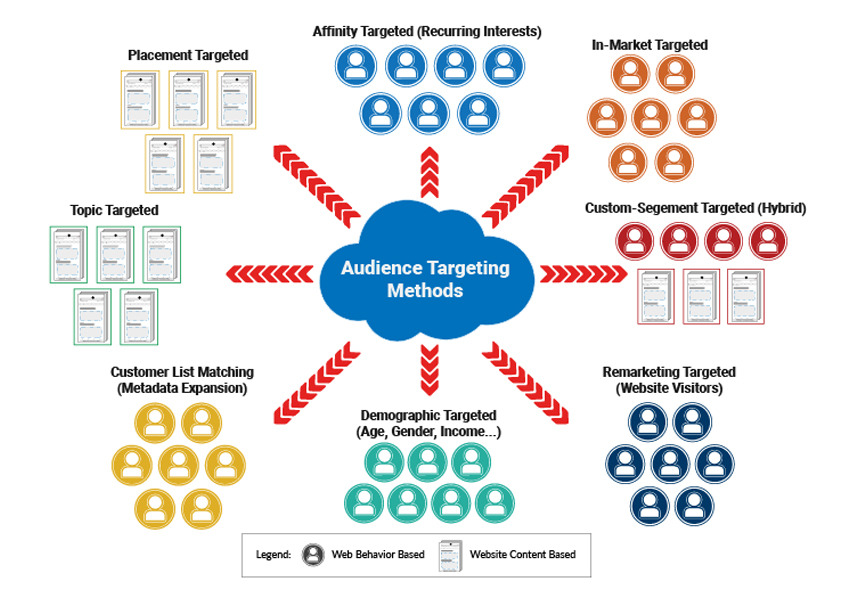
There are eight different ways to target ads on the Google Display Network (GDN) and YouTube. Each targeting option is based on either the content of websites across the GDN or the behavior of users who move through the network.
To plan display campaign targeting, we first determine which targeting methods are most likely to support the campaign goal. These may include in-market, placement, affinity, custom intent, customer list matching, topic, demographic, and remarketing audiences.
Display targeting usually requires testing before the best-performing audience type and configuration become clear.

STAGE 11
Display campaign reports are designed differently because these campaigns often support upper-funnel and mid-funnel activity. Reporting places more emphasis on engagement metrics, custom KPIs, attribution, conversion performance, and financial ratio metrics, using data from Google Ads and Microsoft Advertising.

STAGE 6
Because display ads are advertisements rather than direct response search messages, the performance of display campaigns is more dependent on ad design than search campaigns are.
With display advertising, we're showing ads to audiences who may have a related need or interest, but have not expressed direct search intent. Because of that difference, the principles for designing successful display campaign ads are different. The ad needs to earn attention, communicate quickly, and give the right audience a reason to engage.
STAGE 4
Display campaign audiences are the primary means for targeting display campaigns. Audience selection starts with understanding the customer’s demographics, behavior, interests, and intent, then using in-market audiences, affinity audiences, placements, customer lists, demographics, and exclusions to improve campaign targeting.
STAGE 7
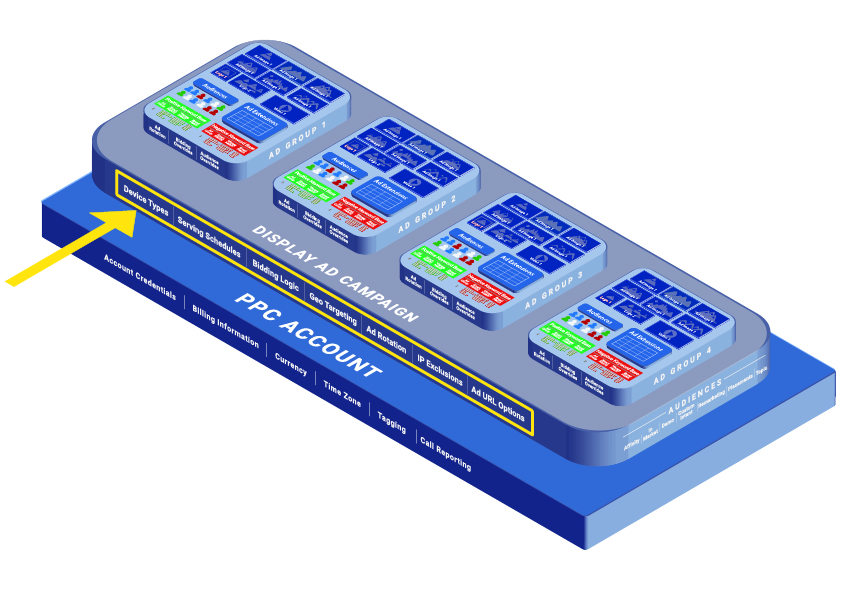
When setting up display campaign serving parameters, our preference is usually to allow the campaigns to initially run 24x7x365. We can then use that data to optimize the campaign schedule, as we have measured what times and days of the week are most effective.
In some b2b markets, we will run campaigns on weekdays only and perhaps not overnight. There are some common mistakes to avoid, for example in the US making sure East coast campaigns stay on late enough to shop up for West coast end-of-day business traffic.
The reason for running campaigns (at least initially) 24x7 is that many campaigns perform well at surprising times – days of the week, and hours of the day you would not expect.

STAGE 8
Display campaigns are more likely to generate "conversion assist" clicks than final-click conversions. For this reason, click attribution is important for assessing the display campaign's role in conversion performance. But accurate conversion tracking is also important with display.
For this reason, we implement 100% conversion tracking coverage, whether the events being tracked are transactions, form submissions, phone calls, or other meaningful events.
We've found that less than half of existing campaigns have full conversion tracking implemented, and even when conversion tracking is implemented, it is more often than not lacking full coverage.
There is a reason for this – conversion tracking can be difficult to implement and test.
STAGE 9
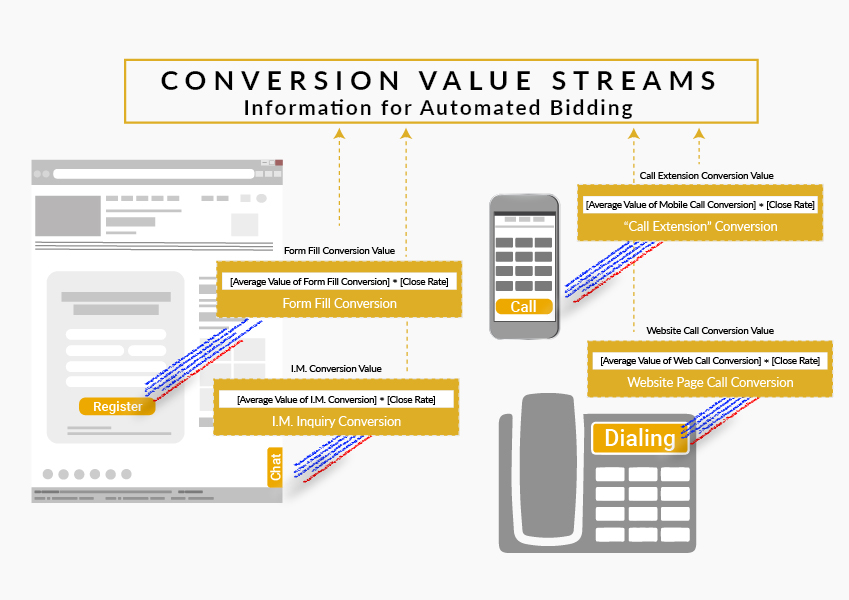
For every PPC account and display ad campaign, we create a conversion value model for each type of conversion event and (related), select a method for click attribution modeling. When a conversion occurs, the value for that conversion is distributed ("attributed") up through the sales funnel, with weighting as defined by the click attribution model.
In our conversion value model, what we are after is the gross margin (value) that each conversion action is producing. In the case of a display campaign that advertises products, the conversion value would likely be (sales price-sales tax)*(average gross margin).
Conversion value modeling is important because it allows for calculating the two most important metrics in paid search: return on ad spend, and advertising margin. But more importantly, it provides valuable information back to the automated bidding algorithms, which use machine learning to maximize the performance of the campaign.

STAGE 5
The ad group structure in display campaigns is used to separate and test targeting methods, targeting configurations, ad images, and ad copy. Without clear ad group structure, it is much harder to evaluate which combinations of targeting and ads are working.
Some targeting methods require multiple ad groups to better control and observe results. For example, custom intent targeting by URL or placement targeting for specific websites may work best with separate ad groups. Using ad groups strategically helps evaluate targeting and ad quality more quickly.

STAGE 10
Display traffic often needs a different measurement approach than search traffic. Since visitors may be earlier in the sales funnel, the important question is not only whether they clicked, but whether they stayed engaged, returned later, joined a remarketing audience, or completed a meaningful next step. Better web analytics helps make those post-click patterns visible so display campaigns can be evaluated and optimized with better context.

STAGE 12
After a display campaign launch, serving can be erratic during the first two or three days. This varies by ad platform, campaign design, targeting configuration, and bidding strategy. Average-size display campaigns usually begin developing a more consistent serving pattern within a few days of launch.
Once a display campaign stabilizes, we look for major issues, such as a single targeting method, audience, or ad group consuming excessive ad spend. We monitor the audiences that pull the campaign into auctions and make corrective adjustments across our display campaign post-launch checklists, dialing the campaign into the type of serving pattern, or “orbit,” we’re looking for.
STAGE 13
Blastoff Advertising clients receive display campaign performance reports on a regular basis as an integral part of our ongoing account performance management process.
For display campaigns, we customize reporting to provide both an overall view and more detailed campaign-level information. A rollup report summarizes performance across all display campaigns, while individual reporting pages provide a closer look at each campaign.
Reporting is an important part of managing PPC campaigns. Most clients receive reports monthly, with current performance compared to previous reporting periods and ongoing challenges or issues highlighted for review.

